The first summer I spent in Japan, I genuinely thought I was getting sick.
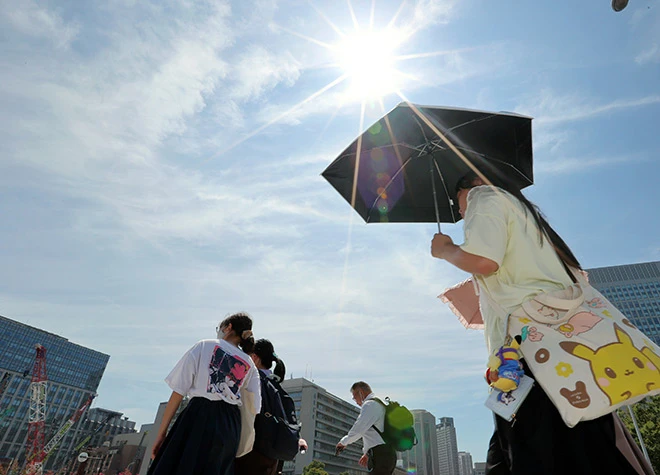
I’d walk five minutes from my apartment to the station and arrive with my shirt stuck to my back, my glasses fogging the second I stepped indoors, and a low-grade headache that wouldn’t quit. I kept drinking water. I kept feeling worse. By the end of week one I was convinced I had some kind of flu, until a coworker in Ginza took one look at me at lunch and said, very matter-of-factly, “Oh — you’re just not used to it yet.”
She was right. Japanese summer isn’t really a season. It’s a physical event. And nothing I’d read online before moving here actually prepared me for what it does to you.
If you’re planning to visit Japan between late June and mid-September, or you’re moving here and trying to figure out how to function — this is the guide I wish someone had handed me. It’s not a list of “top 10 summer tips.” It’s the stuff I’ve actually learned, mostly by getting it wrong first.
First, the honest part: it’s worse than you think
I’m going to be direct because nobody else seems to be. The “Japan is hot in summer” you read about in travel guides massively undersells it.
Tokyo in August routinely hits 35°C (95°F) with humidity north of 75%. The actual problem isn’t the number — Bangkok and Singapore are technically hotter. The problem is the combination of:
- Concrete cities that hold heat and release it back at you all night
- Almost no shade in most neighborhoods (very few trees, narrow streets)
- Cultural expectations that you’ll still wear long pants and a collared shirt to work
- Long walking distances between train stations and your destination
- Evenings that don’t cool down — it’s still 30°C at 9pm
The official term is atsui-natsu (暑い夏), but locals have a more honest word: mushi-atsui (蒸し暑い), which means “steamed-hot.” That’s exactly what it is. You feel like a dumpling.
My second summer, I stopped fighting it and started planning around it. That’s the actual skill. You don’t beat Japanese summer. You learn how to move through it.
What to wear (and what to throw away)
Forget what you’d wear for summer back home. The clothing rules are different here, and most of what works in, say, a dry Mediterranean summer will actively make you miserable.
The shirts
Cotton is the enemy. I know. Everyone says natural fibers breathe. Cotton in Tokyo humidity becomes a wet rag in about 20 minutes and stays that way until you change. I learned this on my way to a client meeting my first July, arriving in a soaked white button-down that I had to swap for a backup shirt in the office bathroom.
What actually works: synthetic technical fabrics, specifically the stuff Uniqlo sells as AIRism. It feels weird at first — slick and almost cold against the skin — but it wicks sweat fast and dries fast. Most of my wardrobe between June and September is AIRism undershirts ($10 each) layered under whatever I actually want to be seen wearing. The undershirt absorbs the sweat. The outer shirt stays presentable.
If you’re visiting and don’t want to commit to a wardrobe, Uniqlo and GU have stores in every major neighborhood. Walk in, buy three AIRism tees, thank me later.
The pants
Same logic. Linen is great in theory but wrinkles into a disaster. Cotton chinos turn into wet cardboard. The Uniqlo Kando pants (感動パンツ, “miracle pants”) look like normal slacks but are technical fabric — they’re the unofficial uniform of every salaryman in Tokyo who has figured out summer. Lightweight, dry fast, look fine in an office.
For tourists who don’t have an office to worry about: loose-fitting shorts or technical hiking trousers are your friend. Skip jeans entirely. Heavy denim and 35°C humidity is a combination invented in hell.
The shoes
This is the one nobody warns you about: you will walk more than you think, and your shoes will get destroyed.
Most days in Tokyo as a visitor, you’ll do 15,000–20,000 steps. The pavement gets hot enough that thin-soled sneakers transmit it. Leather shoes will get sweat-stained from the inside.
Wear breathable mesh sneakers you don’t mind beating up, and bring a second pair if you’re staying longer than a week. I also keep cheap insole liners that I swap out at lunchtime — sounds extra, but it makes the afternoon noticeably less miserable.
For temple visits, slip-ons help. You’ll be removing shoes constantly.
The thing nobody mentions
Bring a small hand towel. This is so universal in Japan that there’s a whole product category for it — they’re called tenugui or just taoru (a hand-cloth, not a Western towel). Every Japanese person carries one in summer. Every public bathroom in Japan assumes you have your own (most don’t have paper towels or dryers).
You use it to wipe sweat from your face, your neck, your hands after the bathroom, and to dab at your shirt before going into a meeting. Buy a couple at any Daiso (¥100 each). Carry one folded in a pocket. You will use it twenty times a day and feel like a different person.
The conbini is your basecamp
If there’s one thing I want every visitor to internalize, it’s this: convenience stores in Japan are not what convenience stores are in your country. In summer they are temperature-controlled survival points, and you should plan your routes around them.
The big three — 7-Eleven, Lawson, FamilyMart — are everywhere, open 24 hours, and almost identical in quality. Here’s the summer playbook:
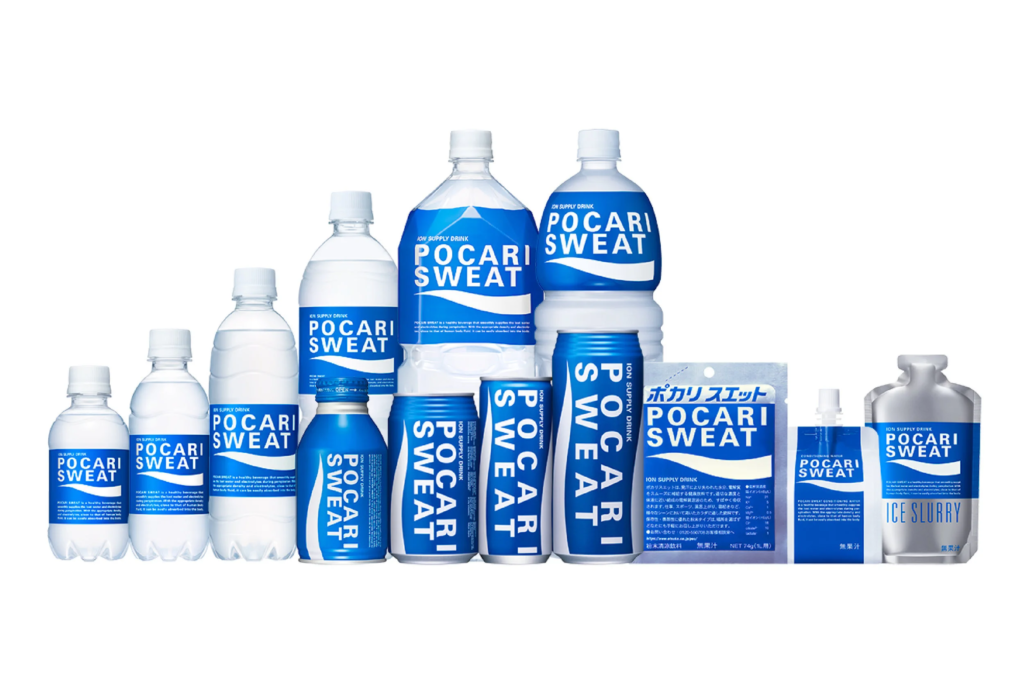
Pocari Sweat (yes, that’s really the name) or Aquarius are the local sports drinks. They taste mildly grapefruit-y and contain the right balance of electrolytes for actually rehydrating in this climate. Plain water doesn’t cut it when you’re losing this much sodium. I drink two bottles a day in August minimum.
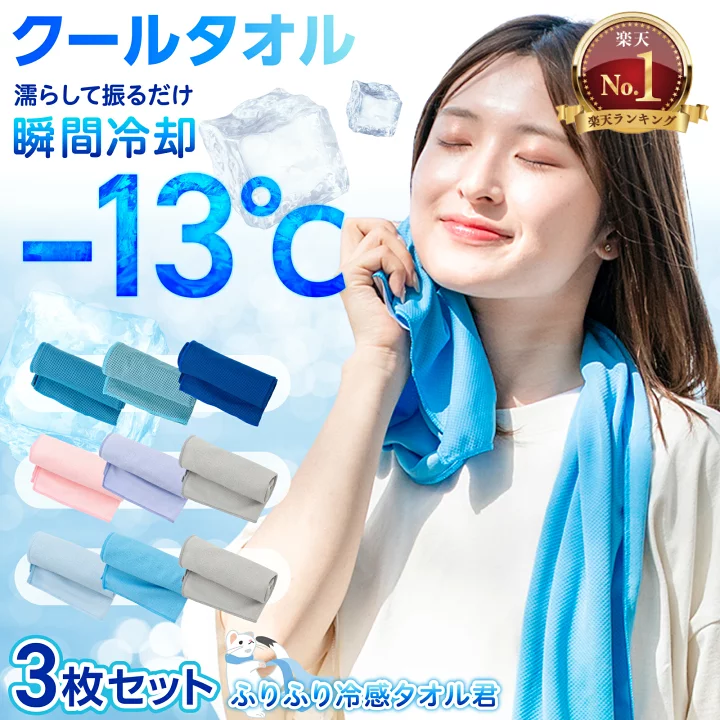
Cold towels — packaged wet towels sold in a small pouch, usually labeled 冷たいタオル. About ¥150. You snap them open and they’re chilled. Drape one around your neck for instant relief. The first time a Japanese friend handed me one, I almost cried.
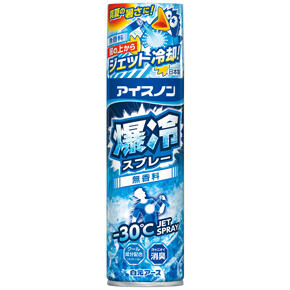
Reisei spray (冷却スプレー) or Gatsby cooling body sheets are in the toiletries aisle. The spray is menthol-based and goes on your shirt, not your skin — it makes your clothes feel cold for 20 minutes. The body sheets are individually wrapped wet wipes with menthol; you use them on your face and arms after a long walk and they’re shockingly effective.
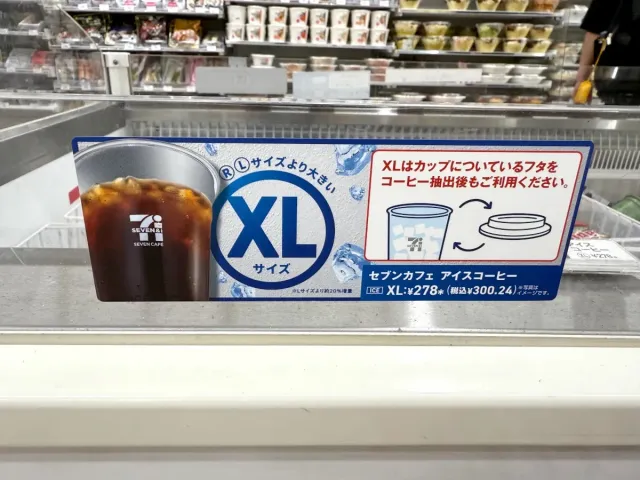
Ice cubes for drinks. Conbini iced coffees and teas come in two pieces: a cup of ice you grab from the freezer, and a sealed pouch of liquid you pour over it. The ice doesn’t melt fast (it’s frozen hard, not slushy). This is the best ¥160 coffee in the world. Get one whenever you pass a conbini between 11am and 4pm.
The bathroom. Every conbini has one, free, clean, air-conditioned. You don’t have to buy anything to use it (though it’s polite to). When you feel yourself overheating, the move is: walk into the nearest conbini, buy a Pocari, stand in the cold for two minutes, use the bathroom, splash water on your face, reset. I do this three or four times on hot weekend days.
The cooling tech you didn’t know existed
A few items I genuinely don’t know how I lived without before moving here:
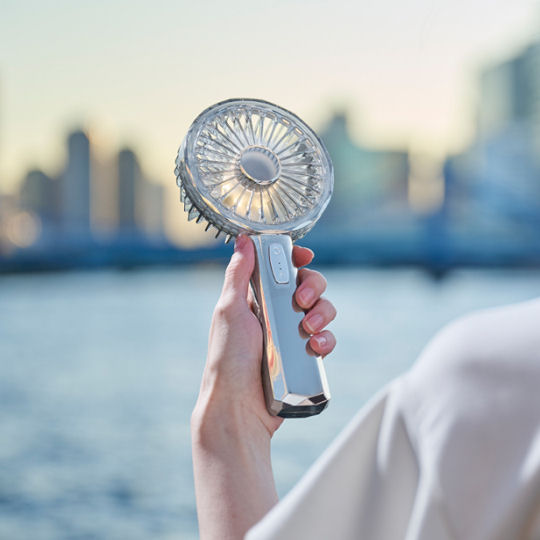
Handheld fans. Battery-powered, USB-rechargeable, sold everywhere from Don Quijote to Daiso. The good ones cost ¥1,500–3,000 and run for 4–6 hours. Every Japanese person under 40 has one in their bag in August. The cheap ones blow hot air around; the better ones (look for ones with a mist function — misuto-fuanu) are genuinely cooling.
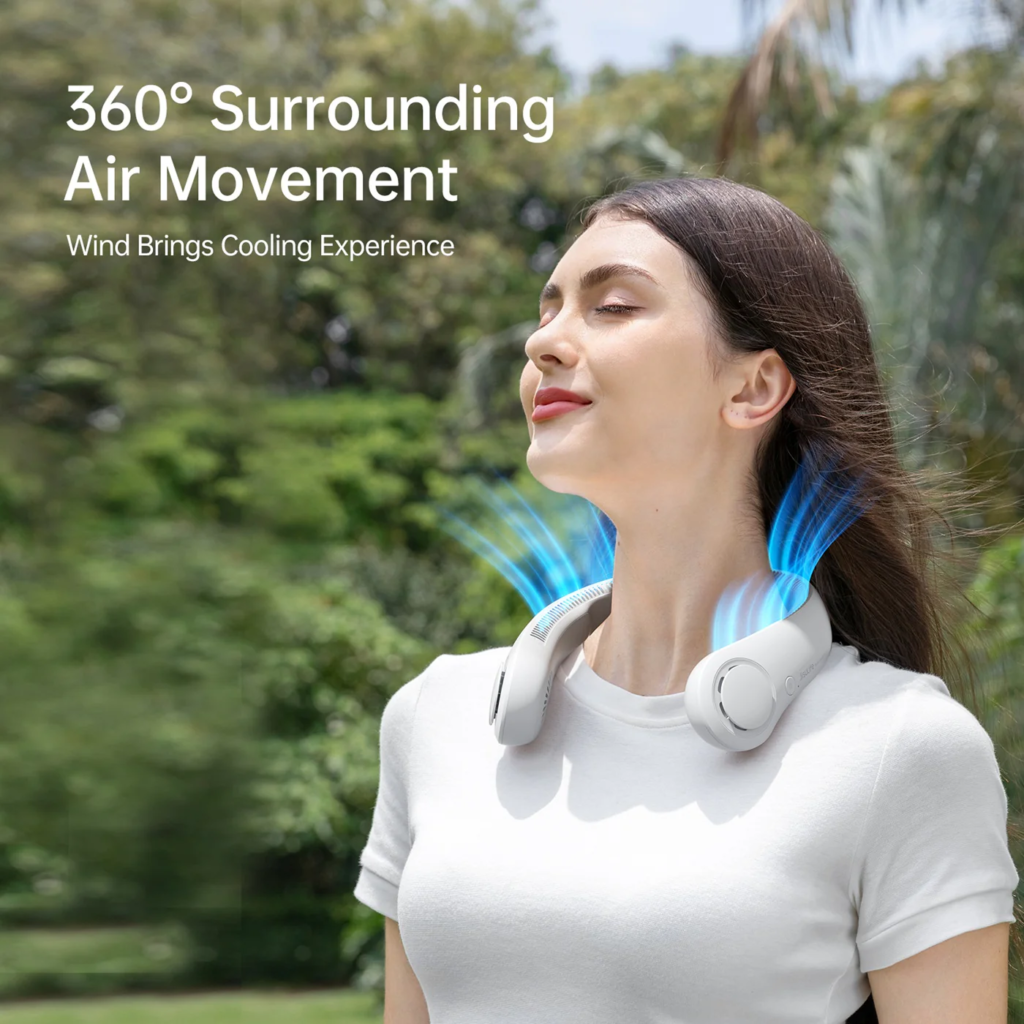
Neck fans. Wearable fans that hang around your neck like headphones, blowing air upward at your face and neck. They look ridiculous. They are also extremely effective. I resisted for two summers, then bought one for ¥3,000 at a Bic Camera and now refuse to leave the house without it between July 20 and September 10.
Cooling neck rings (nekku-kuuraa / ネッククーラー). Plastic rings filled with a gel that freezes at 28°C, so they stay cold for about an hour. You keep two in the freezer overnight, wear one out the door, and swap it when it warms up. About ¥1,500 at Tokyu Hands.
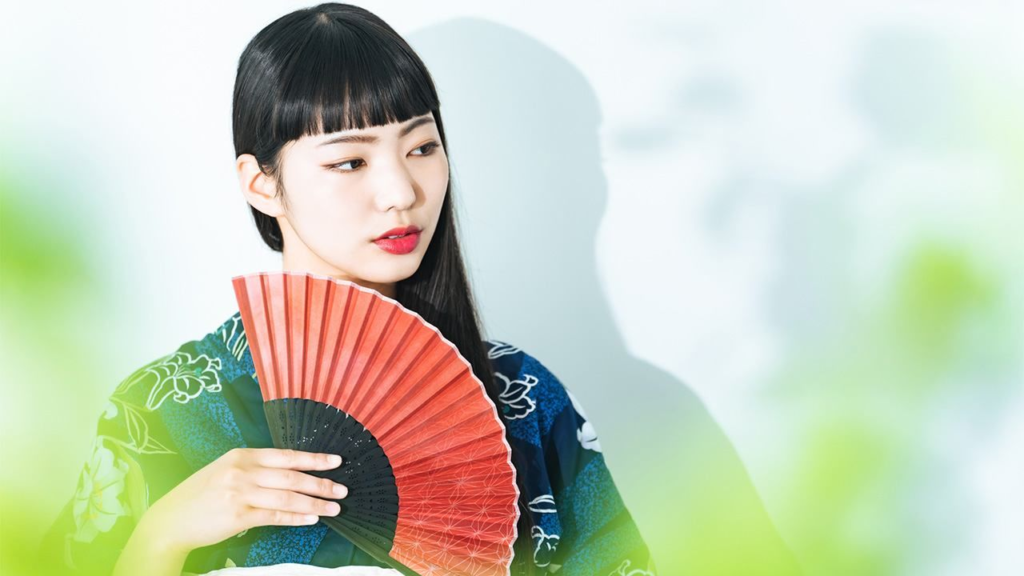
Uchiwa. The flat round paper fans you see at festivals. Free at most matsuri (they hand them out as advertising), cost ¥100 at Daiso. Lower tech than the electric fans but cooler-looking in photos and surprisingly effective when you’re sitting still.
When to actually do things
This is the schedule shift I had to make and you should too:
6:00–9:00 AM — Best time for anything outdoors. Temples are empty, the air is bearable, photos are good. If you can drag yourself out at sunrise, do it.
9:00–11:00 AM — Still okay. Most museums and shrines are open. Walking is sustainable.
11:00 AM – 3:00 PM — Survival mode. This is when you do indoor things: department stores (the food halls in basements are heavenly), aquariums, museums, train rides between cities, long air-conditioned lunches. Don’t try to walk between temples in this window. You’ll regret it.
3:00–5:00 PM — Marginal. Temperature peaks around 2pm but humidity stays brutal until evening. Maybe coffee shop time.
5:00 PM – sunset — The day reopens. The light gets gentler, breezes show up near rivers and the bay, and Japan looks beautiful. This is when locals come out.
Sunset onward — Festival time, beer garden time, river-walk time. Tokyo at 9pm on a summer night, with the heat finally easing and everyone out in yukata eating takoyaki at a matsuri — this is the version of summer that makes the whole brutal middle of the day worth it.
When I’m planning a weekend in Saitama or showing friends around Tokyo, I genuinely build the day around this rhythm. Big walking activity early, long lunch indoors, café in the afternoon, then back out at 6 for the good part.
Heat exhaustion is real and the warning signs are subtle
I’m going to switch tones for a second because this matters.
Japan loses people to heatstroke (necchu-sho / 熱中症) every summer. In 2023 alone, more than 90,000 people were taken to hospital for it. The reason it sneaks up on visitors is that the early signs feel like other things:
- Mild headache (you blame jet lag)
- A weird flat tiredness (you blame the walking)
- Loss of appetite (you blame the heat in a normal way)
- Slight nausea (you blame what you ate)
- Stopping sweating even though it’s hot (this is the dangerous one)
If you stop sweating in heat, you are in trouble. Get into air conditioning immediately, drink Pocari Sweat (not plain water), and sit somewhere cool for at least 30 minutes.
Pre-emptive moves: drink water before you feel thirsty, eat salty things (umeboshi rice balls from any conbini are a perfect summer snack), and don’t skip meals just because it’s too hot to be hungry. Skipping meals is how tourists end up in clinics.
Hotels and AC — the rude awakening
If you’re staying in business hotels or older ryokan, your air conditioning is going to be… a vibe. Many Japanese rooms have AC units that are smaller and less powerful than what you might be used to in the US or Australia. They cool the room but not aggressively, and many have automatic timers that turn them off at night.
Strategies that helped me:
- Set the AC to dry mode (joshitsu / 除湿) instead of just cool. Removing humidity matters more than dropping temperature.
- Close curtains during the day, especially south-facing ones. The sun comes in hard.
- A small USB desk fan running alongside the AC moves air and makes the room feel 3–4 degrees cooler than the thermostat says.
- Wet a hand towel, drape it over your forearms or chest at night. Sounds odd. Works.
If you’re particularly heat-sensitive, splurge on a newer hotel chain — places like Mitsui Garden Hotels, OMO by Hoshino Resorts, or any hotel built post-2015 will have better climate control than the old business hotel chains.
The bright side: Japanese summer is also magical
I’ve spent two thirds of this post telling you why summer here is hard. So let me end on the part that keeps me from leaving every July.
Japanese summer has a particular character that doesn’t exist anywhere else I’ve been. The cicadas (semi) start up in late July and become a wall of sound that vanishes the second you step into a temple courtyard. The smell of yakitori smoke drifts out of every shotengai by 6 PM. Convenience stores stock chilled mango for two months. Old neighborhoods hang wind chimes (furin) outside their windows and you walk past and the sound stops you for a second.
The matsuri season — late July through August — turns the most ordinary suburb into a festival ground for two evenings, with paper lanterns, food stalls, taiko drums, and entire families in yukata. The fireworks (hanabi taikai) are unlike anything else on earth — half-hour, hour-long shows over rivers and bays, with hundreds of thousands of people sitting on tarps eating, drinking, and falling silent at the big finale shells.
Even the heat has its own aesthetic. There’s a word — nokori-atsu (残暑) — for the lingering heat in early September, when the cicadas start to die off and you can feel the season tipping. It’s bittersweet in a way I didn’t know weather could be.
You learn to love it the way you love any difficult thing: by surviving it well enough to start noticing the details.
TL;DR — the actual survival kit
If you skim guides like I do, here’s what to actually have on you between late June and mid-September in Japan:
- AIRism undershirt under whatever you’re wearing
- Handheld or neck fan, fully charged
- Hand towel (always)
- ¥1,000 minimum in cash for vending machines and conbini
- A bottle of Pocari Sweat or Aquarius (refill at every conbini)
- Wet wipes / Gatsby body sheets
- Sunscreen (Japanese brands like Anessa or Biore UV are world-class and lighter than Western brands)
- A foldable umbrella — for sun (higasa) and for the sudden 5pm thunderstorms that are extremely common in August
Get that loadout right, plan your day around the morning and evening windows, and Japanese summer goes from punishing to memorable.
Just don’t try to walk from Asakusa to Ueno at 1 PM in August. I learned that one for you.
Have a Japan summer question or a survival tip I missed? Drop it in the comments — I read every one.
Discover more from Japan Insider Guide
Subscribe to get the latest posts sent to your email.
