If you ask anyone in Japan where to go for food, they will almost always say Osaka. The city even has its own phrase for it — kuidaore, which roughly means “eat yourself broke.” It’s not marketing. Walk through Dotonbori on a Friday night and you will see locals lined up outside takoyaki stands at 11 PM, salarymen squeezed into kushikatsu counters, and tourists trying to figure out which okonomiyaki place actually has the good stuff.
I have spent enough time eating my way through Osaka to have opinions. This guide skips the obvious tourist traps and tells you what to actually order, where to find it, and roughly what it will cost. No affiliate fluff, no “top 10 must-try” filler. Just the food.
Why Osaka Is Different From Tokyo and Kyoto
Tokyo food culture is about refinement. Kyoto is about tradition and seasonality. Osaka is about flavor, portion size, and not being shy about either. The city sits at the historic crossroads of Japan’s rice and merchant trade, which is part of why food here developed the way it did. Merchants wanted filling, affordable, fast meals. That DNA is still in Osaka’s street food today.
The dishes Osaka is famous for — takoyaki, okonomiyaki, kushikatsu — are sometimes called konamon, meaning “flour-based foods.” You will see this word everywhere once you start looking for it.
Takoyaki: Start Here
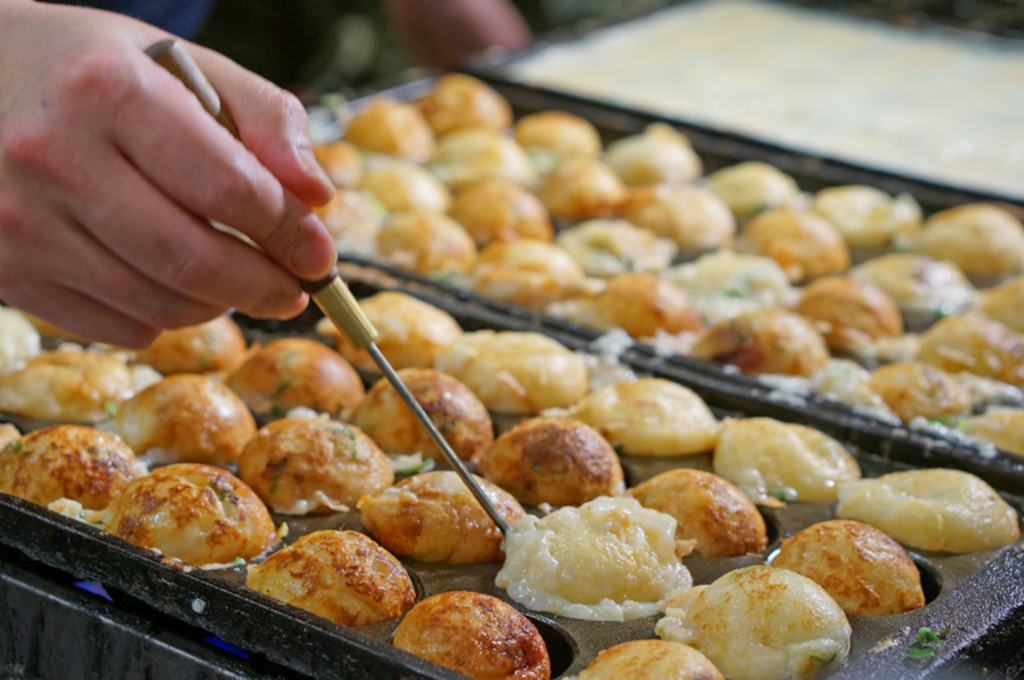
Takoyaki are round, savory balls of batter with a piece of octopus inside, cooked in special cast-iron molds and topped with brown sauce, mayo, bonito flakes, and seaweed powder. Eight pieces usually costs between 500 and 700 yen.
The version most tourists eat is fine. The version locals eat is better. Here is the difference: a good takoyaki should be molten in the middle and slightly crisp on the outside. If you bite into one and it’s uniformly soft all the way through, the cook didn’t get the oil temperature right.
Where to try it:
- Wanaka Sennichimae — Slightly off the main Dotonbori strip, less of a wait, better batter. Locals go here.
- Takoyaki Juhachiban — Inside the Dotonbori area. Reliable if you don’t want to walk far.
- Kukuru — Famous for oversized octopus pieces that stick out of the ball. Touristy but the octopus really is bigger.
Skip the stands with photo menus and shouting staff right on the main bridge. They are not bad, just average and overpriced.
Okonomiyaki: The Savory Pancake That Isn’t a Pancake
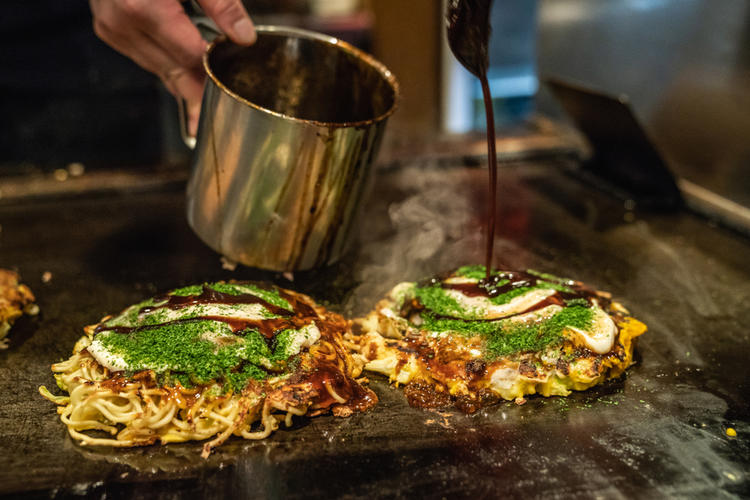
Okonomiyaki gets called “Japanese pancake” in English-language menus, which undersells it. It’s a thick savory cake of shredded cabbage, batter, egg, and your choice of pork belly, seafood, or cheese, cooked on a flat iron griddle and topped with the same sauce-mayo-bonito combination as takoyaki.
Osaka-style okonomiyaki has everything mixed together before cooking. (Hiroshima-style layers it. Don’t get into that argument with an Osaka native.)
Where to try it:
- Mizuno in Dotonbori — Michelin-listed, expect a wait of 30 to 60 minutes at peak times. The yamaimo-yaki version, made with grated mountain yam instead of flour, is what to order.
- Chibo — A chain, but a good one. Easier to get into. The Dotonbori location has river views.
- Fukutaro in Namba — A favorite among locals. Less English signage but the staff are used to foreign customers.
Expect to spend 1,200 to 2,000 yen per person.
Kushikatsu: Fried Skewers and One Important Rule
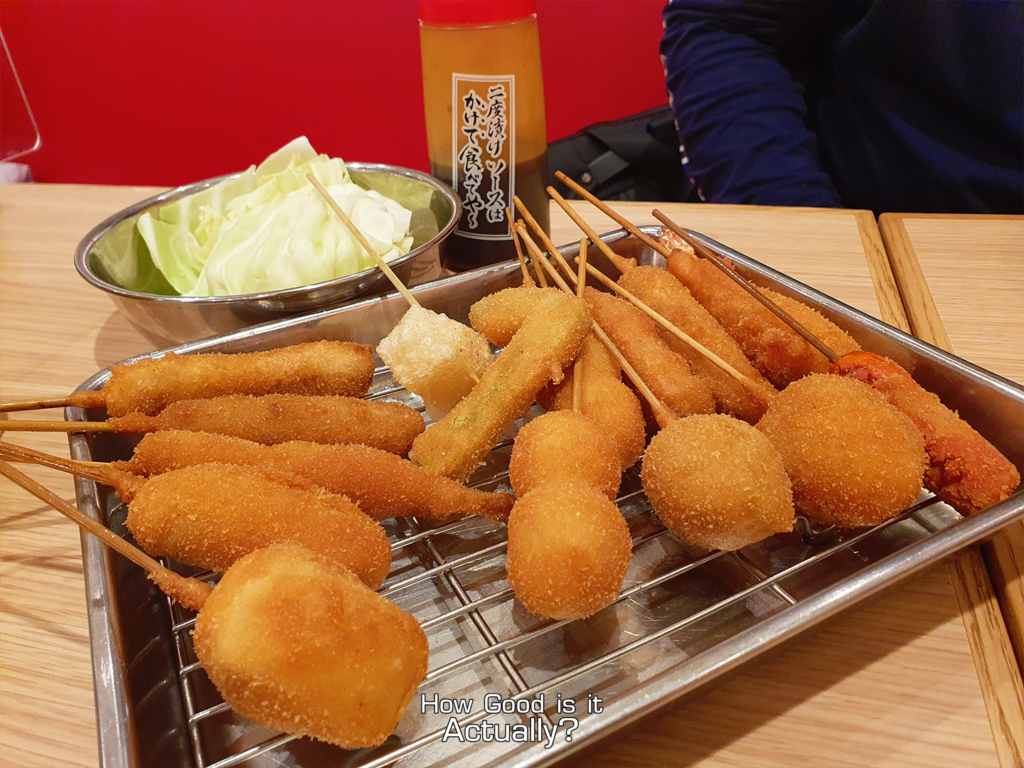
Kushikatsu is breaded and deep-fried skewers of meat, vegetables, seafood, and occasionally cheese or mochi. You dip them into a communal bowl of thin brown sauce that sits on every table.
The rule: no double-dipping. Once you have bitten the skewer, you do not put it back in the sauce. Every kushikatsu place in Osaka has a sign about this, sometimes in five languages. They are serious. Use the shredded cabbage on the table to scoop extra sauce onto your skewer if you need more.
Where to try it:
- Daruma — The most famous kushikatsu chain. Multiple locations including Dotonbori. The grumpy chef logo is everywhere. Touristy but the food holds up.
- Tengu in Shinsekai — Shinsekai is the older, slightly rougher neighborhood that is the historical home of kushikatsu. Tengu is a no-frills standing-bar style spot that locals actually use.
- Yaekatsu in Shinsekai — Small, old, and excellent. Cash only.
A full meal of around 10 skewers plus a beer comes to about 2,000 to 3,000 yen.
Beyond the Famous Three
Most guides stop at takoyaki, okonomiyaki, and kushikatsu. Osaka has more to offer.
Kitsune Udon. Thick wheat noodles in a light dashi broth, topped with a piece of sweet fried tofu. Osaka claims to have invented it. Usami-tei Matsubaya near Shinsaibashi has been serving it since 1893. About 800 yen.
Negiyaki. Like okonomiyaki but made with green onions instead of cabbage, thinner, and served with a soy-based sauce instead of the sweet brown one. Yamamoto in Juso is the spot. Worth the train ride out of the center.
Doteyaki. Beef tendon slow-simmered in miso and mirin until it falls apart. Cheap, rich, and not on any tourist itinerary. Look for it at small izakaya around Tenma or Shinsekai.
Horumon. Grilled beef offal. Osaka has a serious horumon culture, especially around Tsuruhashi, which is the city’s Korean neighborhood. Manryu is a longtime favorite. Go hungry.
Where to Eat by Neighborhood
Dotonbori and Namba. The famous stuff. Loud, crowded, photogenic. Best for first-timers and for okonomiyaki and takoyaki. Avoid the spots with English-only menus and pictures of every dish — those are tourist nets.
Shinsekai. Older, scruffier, and home to the best kushikatsu in the city. Also where Tsutenkaku Tower is. Feels like 1960s Osaka and that’s the appeal.
Tenma. A massive area of izakaya bars north of the river. This is where locals drink and eat after work. Almost no English signage. The Tenma covered market opens early and is great for breakfast — try the standing sushi bars inside.
Tsuruhashi. Osaka’s Korean district, smoky with the smell of grilled meat. Best yakiniku and horumon in the city. The covered market alleys are an experience on their own.
Fukushima. A quieter neighborhood west of Umeda packed with serious sushi, ramen, and wine bars. Less English-friendly but rewarding if you want to eat where Osaka chefs eat on their nights off.
Practical Tips for Eating in Osaka
Cash. Many smaller restaurants are still cash only. Carry at least 10,000 yen in cash when you go out for the evening. 7-Eleven and Lawson ATMs accept foreign cards.
Reservations. For Michelin-listed spots like Mizuno, walk in early (before 6 PM) or be prepared to queue. Some places now use ticket machines or LINE-based queue systems at the door.
Tipping. Don’t. It is not done in Japan and will sometimes cause confusion. The price on the menu is the price you pay, although a 10 percent service charge may be added at some restaurants late at night.
Allergies and dietary restrictions. Vegetarians and vegans have a harder time in Osaka than in Tokyo or Kyoto. Dashi (fish stock) is in almost everything, including dishes that seem vegetable-based. The free app HappyCow is genuinely useful here.
Best time to eat. Lunch is 11:30 AM to 2 PM. Dinner is 6 PM to 10 PM. Many restaurants close between lunch and dinner. Plan accordingly or you will end up at a convenience store.
A Sample One-Day Eating Itinerary
For anyone with only one day to eat in Osaka, here is a route that works:
Start at Kuromon Market around 10 AM. Grab grilled scallops, fresh sashimi, and a strawberry mochi for breakfast. Walk it off heading south to Dotonbori. Have lunch at Mizuno for okonomiyaki — get in line by 11:30. Spend the afternoon walking through Shinsaibashi, then head south to Shinsekai in the late afternoon. Have an early dinner of kushikatsu at Yaekatsu or Tengu. Finish the night back in Dotonbori for takoyaki from Wanaka and a beer by the river.
That’s a full day. Bring stretchy pants.
Final Thought
The thing about Osaka food is that it isn’t trying to impress you. There is no quiet kaiseki presentation, no perfectly plated single bite of something. It’s loud, sauced, greasy in the best way, and meant to be eaten standing up or shoulder-to-shoulder at a counter. The locals here don’t care if you struggle with chopsticks or order the wrong thing — they just want you to eat well.
If you have a favorite Osaka spot I missed, leave a comment. I update this guide every time I go back.
Discover more from Japan Insider Guide
Subscribe to get the latest posts sent to your email.
